
A 2026 guide to anti-snoring devices that work in India. We cover eight options, from the ₹12 mouth tape and nasal strip to the doctor-prescribed CPAP machine. For each one, we explain what it does, who it helps, and what the research says. Every fact links to its source.
See the 8 options Which one for me?- 8 device categories covered
- Sources linked next to every claim
- India prices and availability
- Updated 1 June 2026
Snoring in India by the numbers
A lot more Indians have a real sleep problem than realise it. The latest sleep-study data shows that snoring sits between hypertension and pre-diabetes as one of the most under-treated adult health issues in the country.
How we picked the order
We did not test the products in a sleep lab. What we did do is sort eight categories of anti-snoring device by three simple questions:
- Does it work? What does published research say, in plain percentage terms.
- Who is it for? Mouth-breathers, blocked-nose snorers, back-only snorers, people with diagnosed sleep apnea, and so on.
- Can you actually buy it in India, and at what price?
For each device, the green "Best for" box and the red "Not for" box give you the short answer. The "What the evidence says" callout names a study or guideline you can click through to. Last verified 1 June 2026.
If your snoring is mild and you snore because you breathe through your mouth or your nose feels stuffy, the cheapest options that actually work are Awesome Sleep Mouth Tape, Awesome Sleep Nasal Strips and the Awesome Magnetic Nasal Dilator, starting at ₹12.21 per night. If you only snore on your back, a side-sleeping pillow often beats any device. If your partner has heard you stop breathing or gasp during sleep, please see a doctor first. That's not normal snoring, it's a sleep apnea pattern, and you need a proper sleep test before spending money on anything from this list.
Why people snore
Snoring is the sound your throat makes when air can't pass through cleanly. While you sleep, the muscles in your throat and tongue relax. For most people, that's fine. For snorers, those tissues relax too much, droop into the air passage, and shake with every breath in. The tighter the squeeze, the louder the snore. For a clinical overview, see the Mayo Clinic snoring page or the Cleveland Clinic snoring guide. The main causes:
- You breathe through your mouth at night. This is the most common reason for everyday snoring. An open mouth lets the tongue fall back and air comes in noisily.
- Your nose is blocked. Allergies, a slightly crooked nose bone, or a cold makes you switch to mouth-breathing automatically.
- You sleep on your back. Gravity pulls the tongue backward. About 30 to 40% of regular snorers only snore (or snore much louder) on their back.
- You're carrying extra weight, especially around the neck. Soft tissue around the throat narrows the air passage. Even a 10% drop in body weight noticeably reduces snoring.
- Your jaw or throat shape. A short lower jaw, large tonsils, or a long soft palate at the back of the mouth make snoring more likely.
- Alcohol, sleeping tablets, or being very tired. All three relax your throat muscles even more than usual.
Each device below targets one or more of these causes. The cheapest fix is the one that matches your reason for snoring, not the most expensive thing on the shelf.
The 8 anti-snoring options in India 2026
Ranked roughly by price and proven effectiveness for the average Indian adult. The three Awesome Sleep products lead because they're the cheapest options with research behind them and they're CDSCO approved (the Indian medical device regulator). After that come categories we don't sell, where the right pick depends on your specific situation.
Mouth Tape
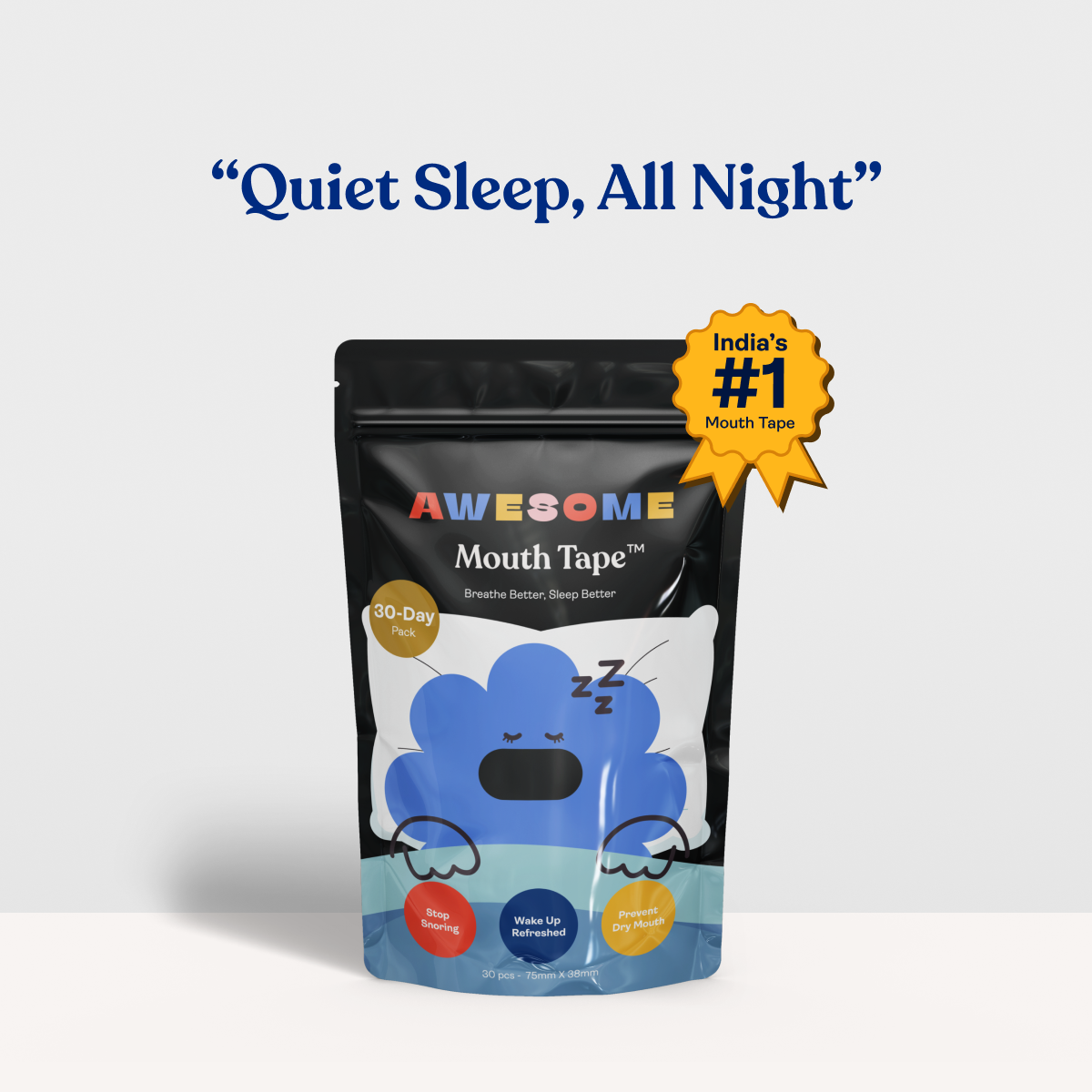
Mouth tape is a small skin-safe sticker you put across your lips before sleep. It keeps your mouth gently closed, which forces you to breathe through your nose instead. Nose breathing is quieter, warms and filters the air, and stops your tongue from falling backward. If you wake up with a dry mouth, this is the first thing to try.
What's good
- Cheapest research-backed option on this page
- ₹12.21 per tape on the 90-pack, CDSCO approved
- Skin-safe medical-grade adhesive, individually sealed
- 656+ verified reviews at ~4.1 stars
- 7-day money-back if it doesn't work for you
What to know
- Not a fix for serious sleep apnea on its own
- The first 2-3 nights can feel weird until you get used to it
- Skip it if you have a cold, allergies acting up, or a stuffy nose
External Nasal Strips
A nasal strip is a flexible plastic band stuck across the bridge of your nose with skin-safe adhesive. As the band tries to flatten itself out, it lifts your nostrils open from the outside, making it easier to breathe in through the nose. If your nose feels stuffy at bedtime, allergies bother you, or you have a slightly crooked nose bone, this is the right first move.
What's good
- Solid research showing easier nose breathing
- ₹12.21 per strip on the 90-pack
- 749 verified reviews at ~4.2 stars
- Skin-safe medical-grade adhesive, made in India
- Free shipping; sold on Amazon, Flipkart, 1mg and JioMart
What to know
- One-use only; you need a fresh strip every night
- Won't help if your snoring is throat or tongue based
- Not a substitute for sleep apnea treatment

Magnetic Nasal Dilator
A magnetic nasal dilator works like a stronger version of a regular nasal strip. You stick two small tabs on either side of your nose, then snap a small reusable magnetic bridge across them. The magnet pulls outward and widens your nostrils more than a plastic spring band on its own. The Awesome Sleep version is the only Indian brand making this right now, currently priced at ₹499 for a 30-strip pack (regular ₹1,499 with a 66% sale). The magnet itself is reusable across many nights, so the price-per-night drops over time.
What's good
- Stronger pull than a regular nasal strip
- Reusable magnetic bridge cuts long-term cost
- Sits outside the nose (nothing pushed inside the nostril)
- 100% refund guarantee on awesomesleep.in
- Currently the only Indian brand selling a magnetic dilator
What to know
- Higher entry price than a basic strip
- Talk to your doctor first if you have a pacemaker
- Magnetic bridge needs daily cleaning

Anti-Snore Pillows and Side-Sleep Aids
If your partner says you only snore when you're on your back, the cheapest fix isn't a device at all, it's just sleeping on your side. About 1 in 3 regular snorers fall into this group. Anti-snore pillows make side-sleeping easier by either tilting your upper body up (a wedge) or being shaped so that lying on your back is uncomfortable. The classic free version is the "tennis ball in the back of the pyjama top" trick.
What's good
- Strong research support for back-only snorers
- One-time purchase, no monthly cost
- Works well alongside mouth tape or nasal strips
What to know
- Pointless if your snoring isn't position-based
- Some specialist pillows take a few weeks to get used to
- Wedge pillows can bother your neck if you have neck issues

Anti-Snore Chin Straps
A chin strap is an elastic band that goes around your head and under your chin to keep your mouth closed while you sleep. The idea is the same as mouth tape, but with a strap instead of a sticker. It's mostly useful for people who already use a CPAP machine and find air leaking out of their mouth at night. On its own, the evidence for chin straps reducing snoring isn't strong.
What's good
- Helps CPAP users who mouth-leak at night
- No adhesive on the skin
- Reusable, washable, one-time purchase
What to know
- Weak evidence for snoring on its own
- Bulky, visible, many find it uncomfortable
- Can press on the jaw joint over long-term use
- Not a sleep apnea treatment on its own

Jaw Advancement Mouthguard (MAD)
A jaw advancement mouthguard, also known as a mandibular advancement device or MAD, is a custom-fitted appliance you wear in your mouth at night, similar to a sports gumshield. It gently holds your lower jaw forward by a few millimeters. That pulls your tongue forward too, which opens up your airway and stops it from collapsing while you sleep. It is the main alternative to a CPAP machine for people who have mild or moderate sleep apnea but cannot get on with the mask.
What's good
- Officially recommended by sleep doctors for mild-moderate sleep apnea
- Works almost as well as CPAP for many people
- Quieter and easier to travel with than a CPAP
What to know
- Needs a dentist for a custom fit; ₹15,000 to ₹50,000+ in India
- Long-term use can slightly change how your teeth meet
- Less effective than CPAP for severe sleep apnea
- Has to be worn every night for the benefit to last

Anti-Snore Sprays and Throat Drops
Anti-snore sprays are throat lubricants you spritz at the back of your mouth before sleep, often with menthol or herbal ingredients. The idea is that wetting the soft tissues at the back of the throat reduces the friction-and-shake that makes the snoring sound. They're cheap and easy to try. Unfortunately, the research doesn't show they do much.
What's good
- Cheap and easy to try
- Few side effects
- Works fine alongside other steps like side-sleeping
What to know
- Independent reviews say there isn't enough evidence to recommend them
- Risk of feeling like the problem is solved when it isn't
- Indian Ayurvedic products often have inconsistent labels

CPAP Machines
CPAP stands for Continuous Positive Airway Pressure. It's a small bedside machine that pushes gentle air through a mask while you sleep. The air keeps your airway propped open so it doesn't collapse, which is what causes sleep apnea. It's the most effective treatment doctors have for moderate-to-severe sleep apnea, but you need a sleep study and a prescription to get one. It's not for everyday snoring.
What's good
- The most effective treatment for moderate-to-severe sleep apnea
- Reduces long-term heart and metabolic risk in sleep apnea patients
- Comes with proper follow-up from a sleep doctor
What to know
- Needs a sleep study and a prescription
- Upfront cost ₹40,000 to ₹2,00,000+ in India
- Mask comfort, dry nose and noise are common reasons people quit
- About half of users stop wearing it within a year without support
Which one is right for you?
The cheapest device isn't always the right device. Match it to why you snore.
Start with mouth tape
You wake up with a dry mouth, sore throat or bad breath. Awesome Sleep Mouth Tape at ₹12.21 per tape on the 90-pack is the cheapest move that has research behind it.
Start with a nasal strip
Your nose feels blocked, you have allergies, or you have a slightly crooked nose. A nasal strip lifts your nostrils open from outside.
Magnetic nasal dilator
Regular strips help but you want more. The magnetic version pulls harder and the magnet is reusable.
Side-sleeping pillow
You only snore when sleeping on your back. A wedge pillow or anti-snore pillow forces you onto your side, and cuts snoring 40 to 50% in this group.
Jaw advancement mouthguard
You have mild-to-moderate sleep apnea but can't put up with a CPAP mask. Doctors officially recommend this as the next step. See a dentist.
CPAP machine
Loud snoring, witnessed pauses in breathing, daytime sleepiness, sleep study confirms moderate-to-severe sleep apnea. CPAP is the gold standard.
When to see a doctor instead of buying a device
Stop shopping and see a doctor if any of these apply to you or your partner. Both Mayo Clinic and Cleveland Clinic use almost the same warning-sign list:
- Your partner has seen or heard you stop breathing, choke or gasp during sleep
- You feel sleepy during the day even after 7 to 9 hours in bed
- You get morning headaches several times a week
- Your blood pressure is hard to control even on medication
- Your snoring has gotten much louder over the past few months or years
- A child of yours snores loudly every night (this needs an ENT check)
These are signs of sleep apnea, not just snoring. According to the 2024 BLESS study from AIIMS Bhopal, about 1 in 3 Indian adults has moderate-to-severe sleep apnea on a proper sleep study, and most don't know. Sleep apnea is linked to high blood pressure, diabetes and heart disease, so getting tested matters. Mouth tape and nasal strips are fine for everyday snoring; they are not a substitute for a sleep study.
What you can actually do tonight
The right anti-snoring device depends on why you snore. The short list for most adults:
- If you breathe through your mouth at night, try a mouth tape first. It's the cheapest move with research behind it.
- If your nose feels blocked, use a nasal strip or a magnetic nasal dilator to open up your airflow.
- If you only snore on your back, sleep on your side, use a wedge pillow, or try the tennis-ball-in-the-pyjamas trick.
- If you snore loud and your partner has seen you stop breathing, see a sleep doctor before buying anything. That's sleep apnea, and it needs a sleep study, not a strip.
Whatever device you pick, three free habits make any of them work better. Both Mayo Clinic and Cleveland Clinic put these at the top of their snoring advice:
- Lose 10% of your body weight if you're overweight.
- Skip alcohol and sleeping tablets close to bedtime.
- Sleep on your side, not your back.
One useful new finding: if you're already on a CPAP and your mouth keeps leaking air at night, a 2025 study in a major sleep-medicine journal found that adding mouth tape helped people stick with their CPAP. Worth mentioning to your sleep doctor.
Frequently asked questions about anti-snoring devices
What is the best anti-snoring device in India for 2026?
There is no single best device because people snore for different reasons. If you breathe through your mouth at night, mouth tape is the cheapest thing to try first. Awesome Sleep Mouth Tape is ₹12.21 per tape on the 90-pack and is CDSCO approved. If your nose feels blocked at night, a nasal strip or a magnetic nasal dilator works better. If you snore loudly and your partner has heard you stop breathing or gasp, see a doctor first. That is a sleep apnea pattern and it needs a sleep study, not a strip from Amazon.
What is the highest rated anti-snoring device?
It depends on what you mean by "rated". By customer reviews on the brand's own site, Awesome Sleep Nasal Strips have 749 verified reviews at 4.2 stars on Judge.me, and Awesome Sleep Mouth Tape has 656+ reviews at about 4.1 stars. By doctor-recommended effectiveness for serious sleep apnea, a CPAP machine has the strongest evidence, but you can only get one with a prescription. For most people who snore but don't have sleep apnea, the cheapest tested options are mouth tape and nasal strips.
Is there an anti-snoring device that actually works?
Yes, several. A 2022 study found that mouth taping cut snoring by 50% and cut breathing pauses by about half in people with mild sleep apnea who breathe through their mouth. Nasal strips have been shown to widen the nose's airflow by 13 to 31% and reduce snoring by 30 to 40% in regular snorers. Jaw advancement mouthguards cut breathing pauses by about 17 events per hour in people with mild to moderate sleep apnea. CPAP machines pretty much eliminate sleep apnea events for people who use them every night. The trick is matching the device to your kind of snoring.
How to stop snoring 100%?
Stopping snoring completely is hard, and most adults can't get it to zero. The combination most likely to get close: see a doctor and get a sleep study if you suspect sleep apnea (and use CPAP if it shows up), use mouth tape if you breathe through your mouth at night, use a nasal strip or magnetic dilator if your nose feels blocked, sleep on your side instead of your back, lose 10% of your body weight if you're overweight, and avoid alcohol or sedatives close to bedtime. Even with all of that, an occasional snore on a rough night is normal.
What is the NHS recommended anti-snoring device?
The UK's National Health Service (NHS) does not name one specific device. NHS advice is to start with self-help: lose weight, sleep on your side, cut down on alcohol, and treat any allergies or stuffy nose. For mouth-breathing snorers, the NHS mentions nasal strips, nasal clips and chin straps as options to try. If snoring continues, the NHS plan is to see a GP, then a specialist if sleep apnea is suspected, then a sleep study, then CPAP or a jaw advancement mouthguard based on how severe it is.
How do I know which anti-snoring device I need?
Match the device to the cause. If you wake up with a dry mouth and sore throat, you breathe through your mouth at night, and mouth tape is the right first thing to try. If your nose feels blocked, start with a nasal strip or a magnetic nasal dilator. If your partner says you only snore when you sleep on your back, a side-sleeping pillow or a wedge will help. If your snoring is loud and your partner has seen you stop breathing or gasp, skip the shopping and see a doctor.
What causes snoring?
Snoring is the sound your airway makes when air can't pass through cleanly. The usual reasons: relaxed throat and tongue muscles (especially after alcohol or sedatives), a blocked or stuffy nose, extra weight around the neck, sleeping on your back (which lets your tongue fall back), or jaw and throat shape. If you snore loudly every night, ask your doctor whether you should be tested for sleep apnea, which is a more serious condition.
When should I see a doctor about snoring?
See a doctor if your partner has heard you stop breathing, choke or gasp during sleep, if you feel sleepy during the day even after 7 to 9 hours in bed, if you get morning headaches several times a week, if your blood pressure is hard to control, or if your snoring has gotten much louder over the last few months or years. Kids who snore loudly every night should also be checked. Mouth tape and nasal strips are fine for everyday snoring, but they are not a fix for sleep apnea, which needs a proper diagnosis. The Mayo Clinic sleep apnea page has a more detailed checklist.
Can anti-snoring devices cure sleep apnea?
No. Over-the-counter anti-snoring devices do not cure sleep apnea. Mouth tape may help mild sleep apnea in people who breathe through their mouth, but only with a doctor's approval. For moderate to severe sleep apnea, the proper treatments are a CPAP machine or a custom-fitted jaw advancement mouthguard, both prescribed by a doctor. Surgery is considered in some cases. Sleep apnea is a medical condition and always needs a proper diagnosis and plan.
Are anti-snoring devices safe to use every night?
For most healthy adults, yes. Quality mouth tape and nasal strips use skin-safe medical-grade adhesive made for nightly use. The most common issue is mild redness for the first few nights, which usually goes away. Do not use mouth tape if you have a cold, sinus infection or chronic blocked nose, or if you have moderate to severe sleep apnea, without first talking to a doctor. Jaw advancement mouthguards can change how your teeth meet over time and should be fitted by a dentist.
Will losing weight stop snoring?
It often helps a lot. Extra weight around the neck and belly narrows the airway and makes snoring worse. Studies show that even a 10% drop in body weight produces a measurable improvement in sleep apnea and snoring for people who are overweight. It is not a guaranteed fix, but it is one of the cheapest long-term moves, alongside sleeping on your side and avoiding alcohol close to bedtime. Mayo Clinic puts weight loss at the top of its self-help list.
Can children use anti-snoring devices?
Most adult anti-snoring devices are not made for children. A few brands sell kids versions: BREATH FIX has a Kids mouth tape and Kids nasal strips, and Boxania has a 30-pack Kids mouth tape on Amazon. Talk to a paediatrician before using any of these on a child. Loud snoring every night in a child should always be checked by a doctor; the usual cause is enlarged adenoids or tonsils, which needs medical treatment, not a strip.
Does sleeping position affect snoring?
Yes, a lot. About 30 to 40% of habitual snorers snore much more when they sleep on their back, because the tongue falls backward and narrows the airway. Sleeping on your side cuts snoring 40 to 50% for this group. A wedge pillow, a specialist anti-snore pillow, or even the old "tennis ball in the back of the pyjamas" trick all do the same job for free or cheap.
Disclaimer: Information on this page is for general guidance and is not a substitute for medical advice. For clinical advice on snoring and sleep apnea, see Mayo Clinic, Cleveland Clinic or the NHS, and always speak to a doctor if you suspect sleep apnea, have severe allergies, chronic blocked nose, or any heart or blood-pressure concern. Prices and clinical evidence summaries are accurate as of 1 June 2026 and may change. Clinical references link to PubMed Central, PubMed, the American Academy of Sleep Medicine, PLOS One, the Journal of Clinical Sleep Medicine, Mayo Clinic, Cleveland Clinic, the NHS and the Cochrane Library. Brand and trademark mentions are property of their respective owners. This guide is independent and not endorsed by any of the brands or organisations referenced.
Shop Awesome Mouth Tape · from ₹12.21 / tape →