
HEALTH WELLNESS
Essential Forearm Workouts for Strength and Grip

Updated March 23, 2026
Fact Checked

Introduction
The development of grip strength is often overlooked in fitness regimens, yet it plays a crucial role in athletic performance and daily activities. Forearm workouts are essential for enhancing this strength, impacting everything from weightlifting to everyday tasks like carrying groceries.
By focusing on forearm exercises, individuals can improve their performance in compound movements and support joint stability, ultimately reducing injury risk. This article delves into the significance of forearm workouts, outlines effective exercises to boost strength and grip, and offers strategies for incorporating these workouts into a comprehensive fitness routine.
It also highlights the importance of tracking progress and setting goals to ensure continuous improvement in grip strength, which is a vital indicator of overall health across various age groups.
1. The Importance of Forearm Workouts for Grip Strength
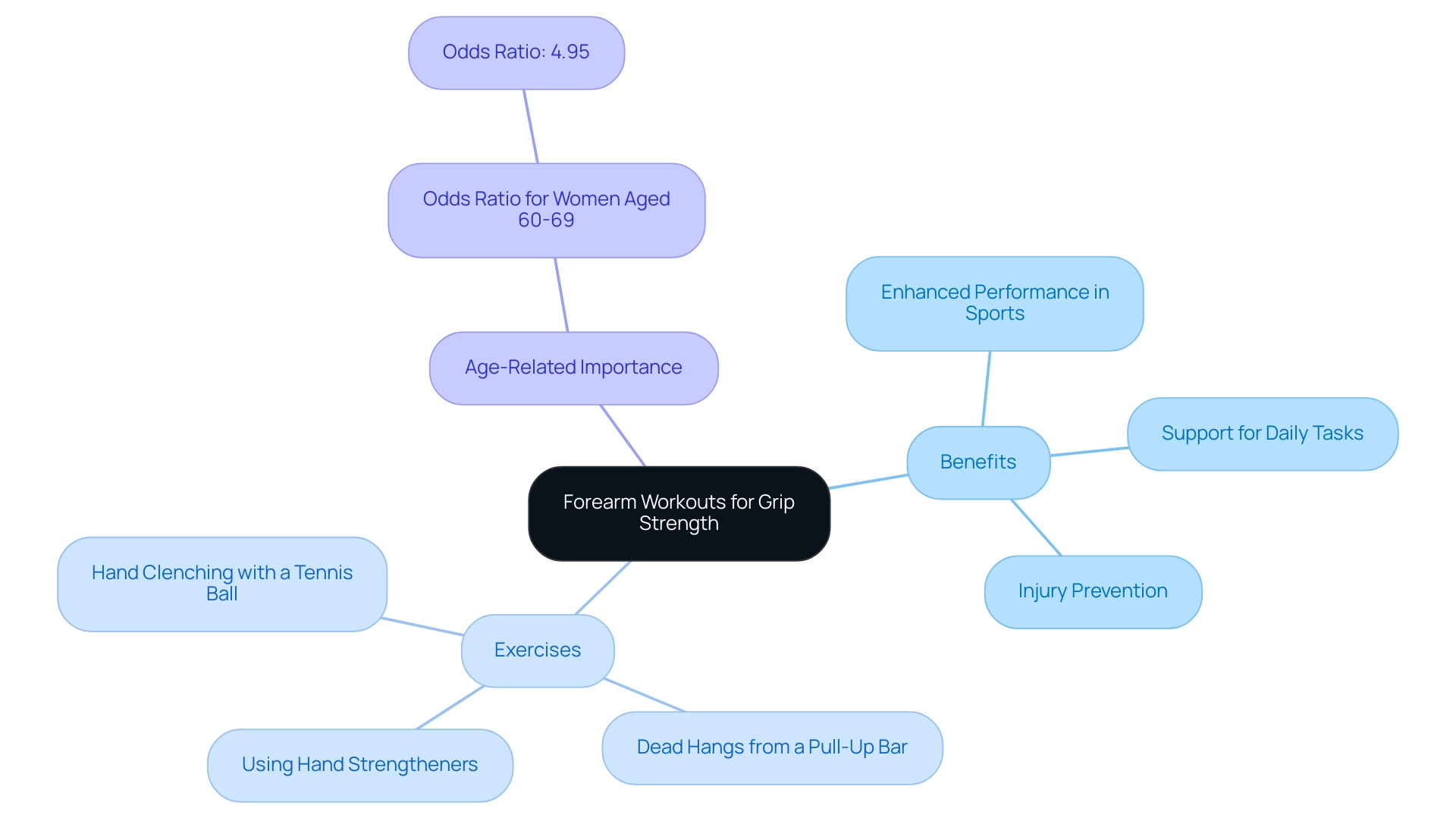
Forearm workouts are essential for enhancing hold capacity, which is a key aspect of overall arm performance. Powerful arms significantly enhance performance in various sports and physical activities, including weightlifting, rock climbing, and martial arts. Furthermore, they contribute to daily tasks such as carrying groceries or opening jars, highlighting their practical importance.
By focusing on lower arm power through forearm workouts, individuals can enhance their performance in compound exercises such as deadlifts and pull-ups, where hand endurance frequently acts as a limiting factor. Moreover, strong arms provide essential support and stability to the wrist and elbow joints, thereby reducing the risk of injuries during demanding physical activities. According to recent studies, athletes who concentrate on enhancing hand power through specific arm exercises can see significant advancements in their overall performance metrics, highlighting the essential role of hand power in sports.
For example, women aged 60–69 years have an odds ratio of 4.95 for being rated as excellent in hand power compared to younger women, illustrating the significance of preserving hand power across various age groups. Additionally, wrist deviation activities, while often regarded as a low priority, can still contribute to overall forearm muscle mass and should not be overlooked. Hand-enhancing activities, such as:
- Hand clenching with a tennis ball
- Dead hangs from a pull-up bar
- Using hand strengtheners
serve as excellent forearm workouts that engage multiple muscle groups and offer practical ways to improve hold capability.
As William J. Kraemer from the Department of Human Sciences at The Ohio State University asserts, grip power is not merely a measure of physical capability but an indicator of overall athletic performance and longevity.
2. Top 7 Forearm Exercises to Boost Strength and Grip
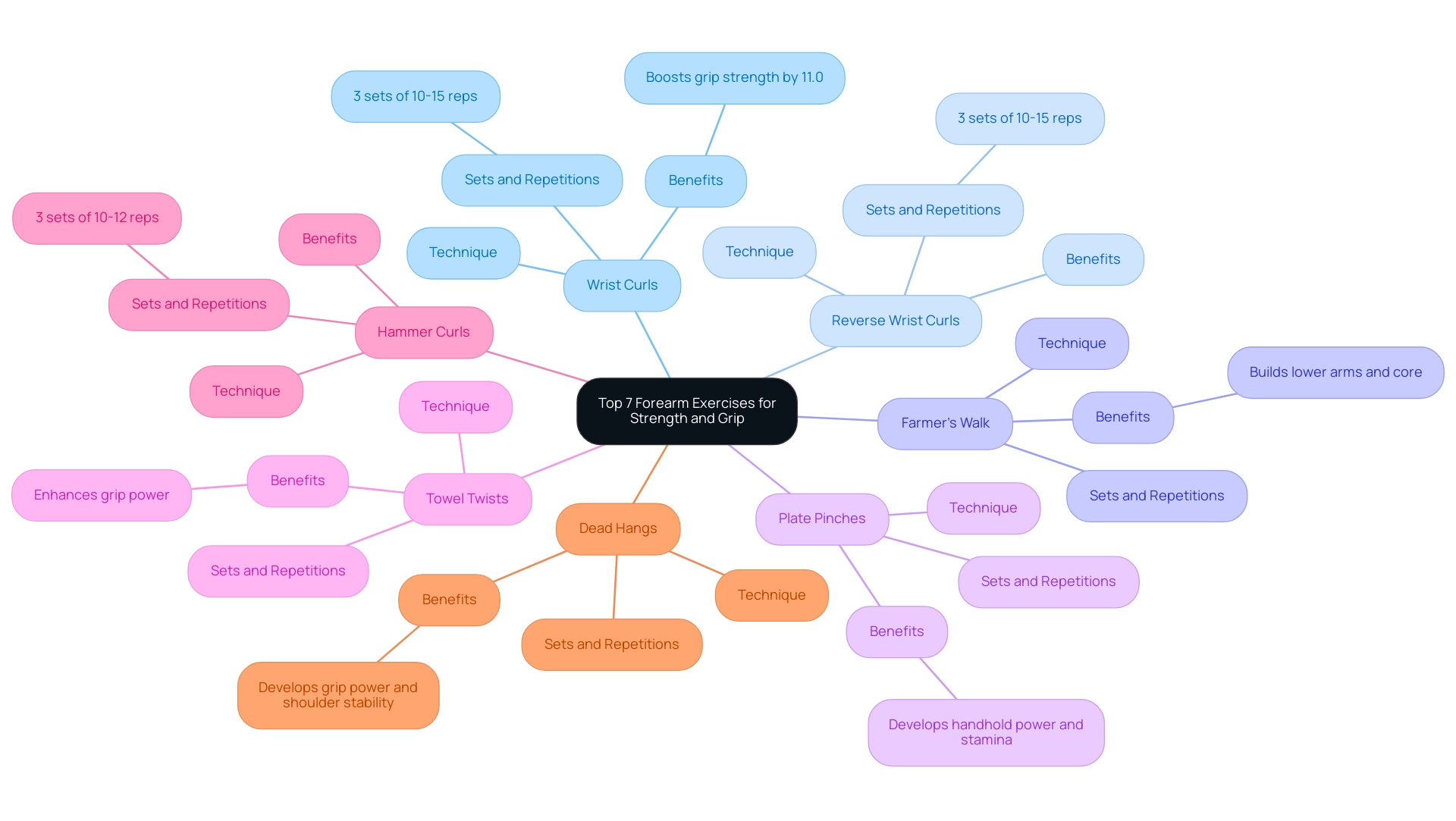
Here are seven essential forearm exercises that can significantly enhance strength and grip:
-
Wrist Curls: Sit on a bench with your arms resting on your thighs, grasping a dumbbell in each hand. Curl the weights upward, concentrating on contracting the forearm muscles effectively. Aim for 3 sets of 10-15 repetitions. Research indicates that incorporating these activities can result in a significant boost in grip strength, with peak crush grip strength rising by 11.0% in control groups.
-
Reverse Wrist Curls: This activity is similar to wrist curls but executed with your palms facing down. It primarily targets the extensor muscles of the arm. Execute 3 sets of 10-15 repetitions for optimal results.
-
Farmer’s Walk: Grasp a pair of heavy dumbbells or kettlebells and walk a predetermined distance or for a set duration. This activity not only builds the lower arms but also activates the core and improves overall stamina, making it a fundamental component in numerous training regimens. As mentioned by physical therapist Tanner Neuberger, these forearm workouts can be incorporated into your upper body conditioning regimen a few times each week.
-
Plate Pinches: Pinch two weight plates together using your fingers and thumb, holding them for as long as possible. This exercise is especially beneficial for developing handhold power and stamina, a crucial aspect of lower arm progression.
-
Towel Twists: Using a towel soaked in water, twist it as forcefully as you can, alternating the direction of the twist. This imitates the action of twisting a towel and effectively enhances the arms, contributing to better grip power. Moreover, the Towel Hammer Curl, which entails wrapping a towel around a kettlebell handle, is a creative method to improve arm power.
-
Hammer Curls: Stand upright with dumbbells at your sides, palms facing your body. Curl the weights upward while maintaining the palms-in position. This activity targets both the forearms and biceps. Complete 3 sets of 10-12 repetitions for best results.
-
Dead Hangs: Hang from a pull-up bar for as long as you can manage. This simple yet effective routine develops grip power and improves shoulder stability. Aim for multiple sets, progressively increasing your hang duration to maximize gains in power. According to a case study titled 'Integrating Forearm Workouts into Routine,' including forearm workouts in your regimen several times a week is advised for improved muscle development.
3. Incorporating Forearm Workouts into Your Routine
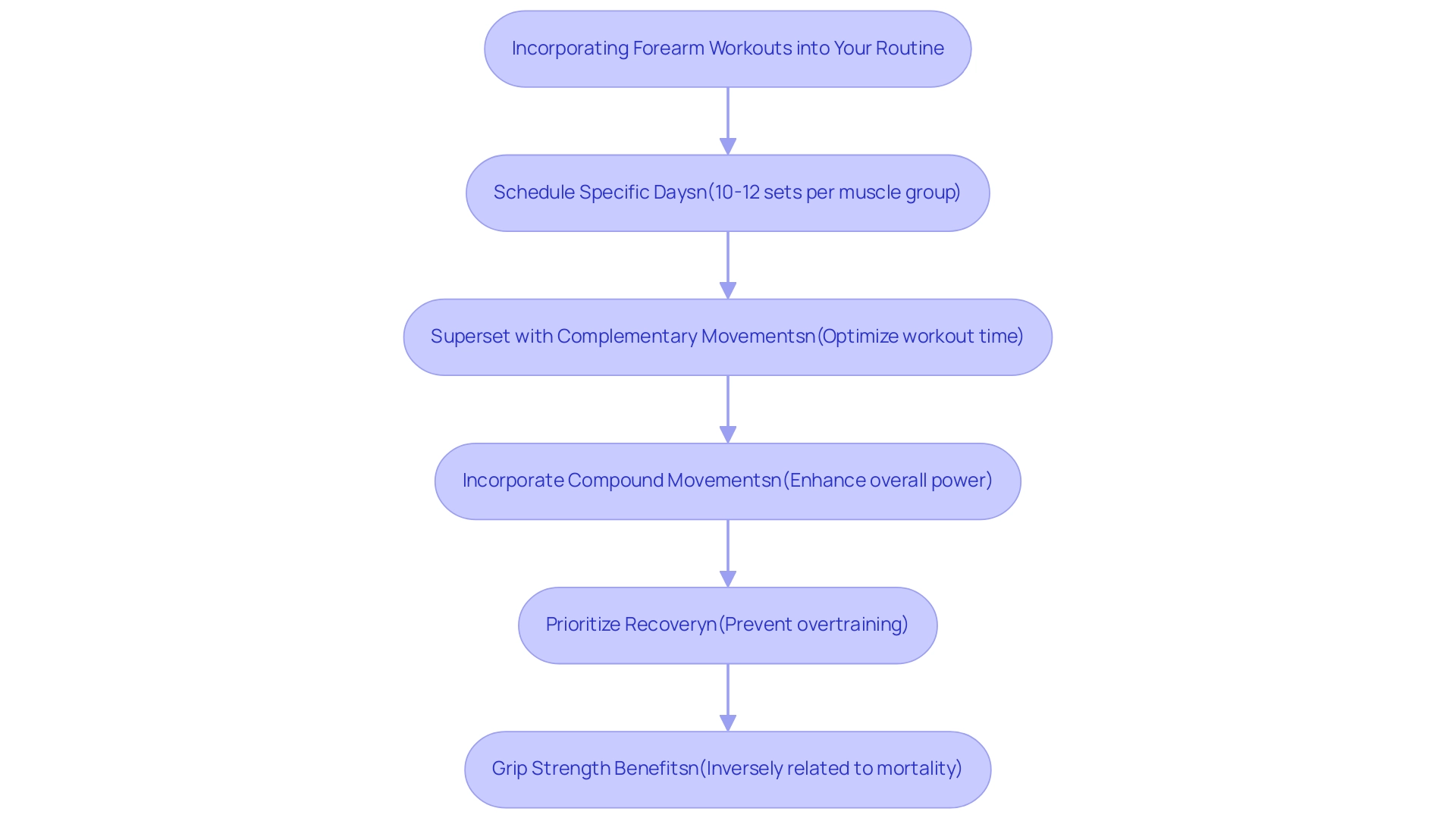
Incorporating forearm workouts into your fitness routine can be achieved with a few strategic adjustments. Here are some important suggestions:
- Schedule Specific Days: Set aside particular days for training the lower arms, preferably coordinating them with upper body exercises or establishing separate sessions focused specifically on hand power. Completing a minimum of 10-12 quality sets per muscle group spread across 2-3 sessions is a reasonable strategy for muscle groups that you focus on developing.
- Superset with Complementary Movements: Improve your training efficiency by supersetting wrist movements with other upper body actions. For example, executing wrist curls immediately after bicep curls can optimize your workout time and intensity. After the wrist extension activity, crush grip power was observed to be 16% reduced compared to prior, offering additional proof of how the wrist extensor muscles aid in grip capability.
- Incorporate Compound Movements: Choose exercises that naturally involve the lower arms as secondary muscles. Exercises like deadlifts and pull-ups not only enhance overall power but also aid in the development of the lower arm. This is especially pertinent for individuals aiming to enhance gains in arm muscle mass and power for particular activities, such as arm wrestling.
- Prioritize Recovery: Ensure that sufficient rest is included in your training plan to prevent overtraining and support muscle recovery. Incorporating forearm workouts into your warm-up or cool-down routines can also enhance flexibility and reduce the risk of injury.
According to recent findings, grip power is inversely related to all-cause mortality, serving as a crucial indicator of overall health, particularly among older populations. Therefore, focusing on forearm workouts not only improves power but also contributes to wider health benefits.
4. Tracking Progress and Setting Goals
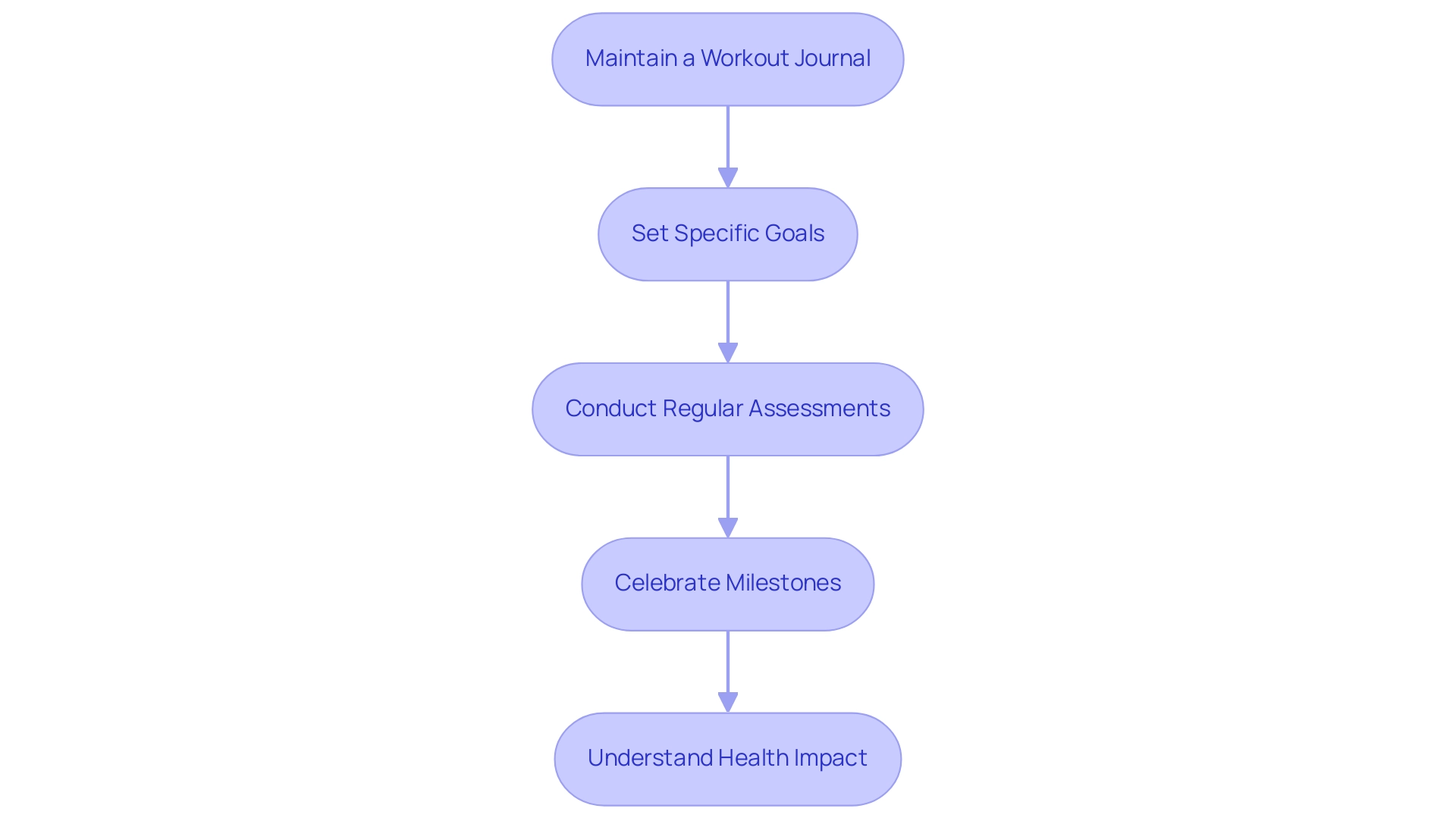
Maximizing the benefits of arm workouts hinges on the effective tracking of progress and the establishment of achievable goals. Here are several strategies to enhance your forearm strength journey:
- Maintain a Workout Journal: Documenting each workout, including exercises performed, weights utilized, and repetitions completed, allows for a clear record of improvements over time. This practice not only provides accountability but also highlights your progress in your forearm workouts.
- Set Specific Goals: Establishing measurable targets, such as increasing the weight lifted in wrist curls or enhancing your dead hang duration, is crucial. Setting realistic and time-bound goals is essential to maintain motivation and focus during forearm workouts.
- Conduct Regular Assessments: Periodic evaluations of your hold capability and forearm workouts endurance are essential. Using force measurement tools can effectively measure your progress in forearm workouts, enabling you to modify your training routine based on solid data.
- Celebrate Milestones: Recognizing your achievements—whether lifting heavier weights or completing a specific number of repetitions—serves to motivate you further. Celebrating these milestones reinforces your commitment to your fitness journey and encourages continued effort in forearm workouts.
The significance of tracking progress is underscored by a study involving 9,431 individuals aged 18 to 92 years, revealing that males had a mean age of 42.5 years and females 46.5 years. This study emphasized how hand force relates to overall health indicators, observing notable variations in disease occurrence and physical activity levels between genders. For individuals aged 60 to 92, low hand force was linked to a reduction in lean mass and higher disease prevalence, as demonstrated in the case study titled 'Impact of Low Hand Force on Health Metrics.'
This emphasizes the importance of setting and achieving grip strength goals. As noted by Johannes Scherr, Accuracy and Reliability of Grip Strength Measurements: A Comparative Device Analysis , tracking your progress is not just beneficial; it is essential for long-term health and fitness success.
Conclusion
Enhancing grip strength through targeted forearm workouts is essential for both athletic performance and everyday functionality. The article underscores the importance of strong forearms, detailing how they contribute to activities ranging from weightlifting to simple tasks like carrying groceries. With a focus on effective exercises, such as:
- Wrist curls
- Farmer’s walks
- Dead hangs
individuals can significantly improve their grip strength and overall arm functionality.
Incorporating these workouts into a fitness routine requires strategic planning, such as:
- Scheduling specific training days
- Supersetting with complementary exercises
- Emphasizing recovery
Tracking progress and setting realistic goals are crucial to ensure continuous improvement and motivation. By documenting workouts and regularly assessing grip strength, individuals can make informed adjustments to their training regimen, ultimately leading to enhanced performance and health outcomes.
Prioritizing forearm workouts not only bolsters physical strength but also serves as a vital indicator of overall health. As grip strength correlates with longevity and disease prevention, maintaining and improving this strength should be a key focus for individuals of all ages. Embracing these practices will yield substantial benefits, reinforcing the critical role of grip strength in both athletic endeavors and daily life.